
Showing 1–12 of 14 results
-
CEM120H
Fast Patch Cementitious Mortar for Full-depth Concrete Repair
-
CHEM-CRETE® CEMENTIX® CEM 20M
Cementitious Powder Addition to Concrete Mixtures for Rapid Pavement Repair
-
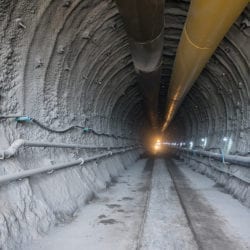
CHEM-CRETE TUNNEL LINING SYSTEM
One Component Cementitious Mortar for Tunnel Lining
-
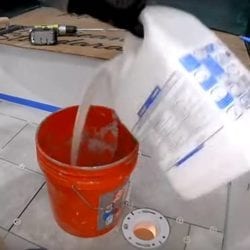
EB550 SBR
Liquid Bonding Admixture
-

CEM140
Thin Set Fastcrete Super Concrete Mortar – For Application Thickness Less Than 1 inch
-
CEM150
Fastcrete Super Concrete Mortar – For Application Thickness of 1 to 2 inches
-
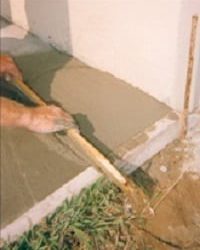
CEM210
Polymer Modified Cementitious Floor Repair Mortar
-

CEM220
Polymer Modified and High Build Cementitious Repair Mortar
-
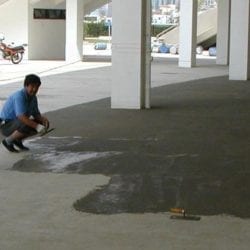
CEM240
Polymer Modified Thin Repair Mortar – Up to 12 mm Thickness in One Application
-
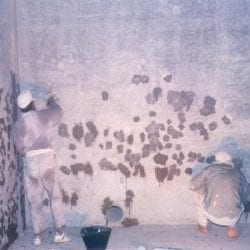
CEM241
Cementitious Pin Hole Filler
-

CEM241-F
Water and Weather Resistance Fine Exterior Finish
-

CEM260
Cementitious Self-Leveling Floor Topping
A damaged section of concrete rarely waits for a convenient repair window. A pothole on an active runway, a spalled highway lane, a cracked loading dock floor; all of these have to be fixed and put back into service fast, without sacrificing the strength the structure needs to hold up for years afterward. International Chem-Crete’s Concrete Repair line is built around that exact demand: a full range of fast-setting concrete repair mortars, structural shotcrete systems, and bonding agents engineered to get concrete back in service quickly and keep it there.
Fast Setting Concrete Repair for Every Depth
Not every repair is the same size. Chem-Crete’s Super Concrete Mortar family covers the full range of patch depths with one-component, rapid strength-gaining mortars that only need water added on site. CEM140 is formulated for thin-set repairs under 1 inch deep, while CEM150 handles deeper patches starting at 1 inch. For repairs that go deeper still, CEM120H is purpose-built as a fast patch cementitious mortar for full-depth concrete repair, restoring structural sections rather than just resurfacing them.
Rounding out the family, CEM210 and CEM220 are polymer-modified repair mortars formulated for floor repair and high-build patching, and CEM260 is a cementitious self-leveling floor topping for large, flat repair areas. Each product in this concrete repair family is designed to gain strength quickly, so patched areas can be reopened to traffic or equipment without an extended cure-and-wait period.
Airport Pavement Repair and Highway Pavement Repair
Runways and highways can’t stay closed for long, which makes cure time as critical as strength. CHEM-CRETE® CEMENTIX® CEM 20M is a cementitious powder additive engineered specifically for this problem: mixed into a standard concrete batch, it produces a workable, fast-curing concrete that reaches over 5,800 psi within two to four hours, solving the pavement closure problem that ordinary concrete repair creates.
That rapid strength gain makes CEM 20M suited to airport pavement repair on active taxiways and runway sections, and to highway pavement repair where lane closures carry real cost for every extra hour. With a slump range of 3 to 5 inches for easy placement and a 25-minute working window after mixing, crews get enough time to place the material properly before it begins its rapid strength climb.
High Compressive Strength Concrete Repair for Large Structural Work
Some repairs go beyond patching a surface, requiring a full structural rebuild on vertical or overhead concrete. CHEM-SHOTCRETE® CEM296 and the CHEM-CRETE TUNNEL LINING SYSTEM are both one-component, microsilica-enhanced shotcrete mortars built for exactly that kind of high compressive strength concrete repair, reaching roughly 7,700 psi at 28 days with strong bond strength and low water absorption.
Both are applied by dry spray guniting, making them practical for large vertical and overhead structural repairs where traditional formwork isn’t feasible, from tunnel linings to bridge substructures.
For repairs that call for a liquid bonding solution rather than a sprayed mortar, EB550 is an SBR latex bonding agent that improves the bond between new repair material and existing concrete, a critical step for making sure a patch stays put under real load.
Choosing the Right Repair Product for the Job
- Thin or shallow patches: CEM140, CEM210, CEM220
- Deep or full-depth structural patches: CEM150, CEM120H
- Runway and highway pavement closures: CEM 20M
- Large vertical or overhead structural rebuilds: CHEM-SHOTCRETE CEM296, Tunnel Lining System
- Improving bond strength on any repair: EB550
For highway departments, airport authorities, and contractors managing infrastructure that has to reopen fast, matching the repair depth and timeline to the right product is what keeps a fix from becoming a repeat job.
Frequently Asked Questions
Que : What makes a concrete repair mortar “fast setting”?
Ans : Fast-setting concrete repair mortars are formulated to gain usable strength within hours rather than the standard 28-day cure cycle, allowing patched areas to be reopened to traffic or equipment much sooner.
Que : When is a full-depth concrete repair necessary instead of a surface patch?
Ans : Full-depth concrete repair is needed when deterioration or damage extends through the full thickness of a slab or section, not just the surface. CEM120H is formulated specifically for this kind of structural-depth patching.
Que : Why does airport pavement repair require a different product than a typical concrete patch?
Ans : Airport pavement repair often has to reopen within hours, not days, so products like CEM 20M are engineered for very rapid compressive strength gain, solving the pavement closure problem that standard concrete repair creates.
Que : Can CHEM-SHOTCRETE CEM296 be used for both vertical and overhead repairs?
Ans : Yes. It’s formulated for dry shotcrete application in overhead, vertical, and horizontal repairs, making it suited to structural work like tunnel linings and bridge substructures where traditional formwork isn’t practical.
Que : Does EB550 replace the need for a repair mortar?
Ans : No. EB550 is a bonding agent, not a repair mortar. It’s used alongside products like CEM140 or CEM150 to improve adhesion between new repair material and the existing concrete substrate.