Showing all 8 results
-
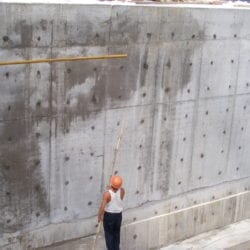
CHEM-CRETE® SOFIX® CCC® 100
Hydrophilic Water Vapor and Moisture Blocker for Transmission Rates up to 12 Lbs per 1000 ft², per 24 Hours
-
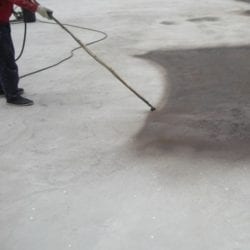
CHEM-CRETE® SOFIX® CCC® 700
Hydrophilic and Hygroscopic Water Vapor and Moisture Blocker for transmission rates up to 18 Lbs per 1000 ft², per 24 Hours
-
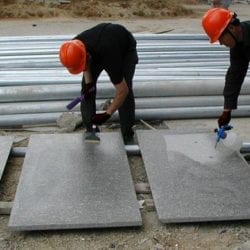
CHEM-CRETE® YUFIX® CCC® 1000
Water-based, Concrete and Masonry Water Repellent and Sealer
-
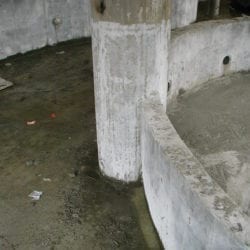
CHEMCRETEX® CEM600
Cementitious Crystalline Capillary Waterproofing System For Concrete Structures
-
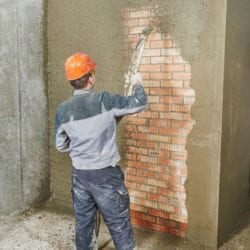
CHEM-CRETE® CCC® 150
Cement-based Waterproofing Coating for Concrete Structures
-
CHEM-CRETE® FLEX CCC900
Two-Component, Acrylic Modified, Flexible Cementitious Coating
-
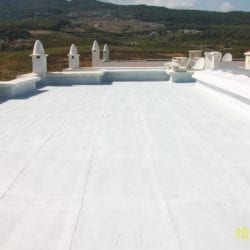
CHEM-ROOF 550
One-component Water-based Elastomeric Waterproofing Roof Coating
-
CHEM-SHIELD CCC800
Architectural Textured Structural Coating
Water is persistent. It doesn’t need to force its way through concrete; a tiny pore, hairline crack, or years of unchecked vapor pressure can be enough to create an entry point. And once it happens, the damage escalates rapidly: rusty rebar, spalling, scaling, mildew growth on concrete, mold growth in concrete, ruined flooring, failed roofs. A reliable concrete moisture blocker isn’t a nice-to-have on a structure meant to last decades; it’s foundational.
International Chem-Crete built its Waterproofing & Moisture Blockers line around that reality, addressing everything from straightforward concrete waterproofing to subfloor vapor condensation and subfloor mold problems that surface long after a project is considered finished.
Why “Waterproof” Isn’t One-Size-Fits-All
Ask ten contractors what concrete waterproofing means, and you’ll get ten different answers, because the right approach depends entirely on where the water is coming from and what the structure needs to resist. A below-grade foundation dealing with hydrostatic pressure needs a different basement concrete sealer than a rooftop dealing with UV exposure and ponding water, and a subfloor dealing with vapor emission needs something different again.
That’s why this category isn’t a single product, but a system of solutions:
- CHEM-CRETE® SOFIX® CCC® 100 & CCC® 700: Hydrophilic and hygroscopic concrete vapor blockers, formulated for vapor transmission rates up to 12 and 18 lbs per 1,000 ft² every 24 hours. Where subfloor vapor condensation drives mildew growth on concrete and flooring failures, these products are designed to intercept moisture before it ever reaches the surface.
- CHEM-CRETE® YUFIX® CCC® 1000: A water-based concrete and masonry water repellent and crystalline penetrating sealer, and a practical concrete sealer for surfaces that need long-term repellency and adhesion strength without changing their appearance.
- CHEMCRETEX® CEM600: A crystalline cementitious coating that works its way into the concrete’s own pore structure, forming genuine concrete moisture blockers from within rather than just setting on top of it.
- CHEM-CRETE® CCC® 150: A cementitious coating built as a durable, code-friendly basement concrete waterproofing and general-purpose barrier waterproofing coating against water intrusion.
- CHEM-CRETE® FLEX CCC900: A two-component, acrylic-modified, flexible cementitious coating designed to accommodate structural movement, giving it a natural concrete crack-healing ability in places where rigid coatings tend to fail and lose adhesion strength.
- CHEM-ROOF 550: A one-component, water-based elastomeric coating built for concrete waterproofing on roof systems, standing up to weather, UV, and ponding without the seams and failure points of traditional membranes.
- CHEM-SHIELD CCC800: An architectural textured structural coating that combines moisture protection with a finished, presentable surface that doesn’t have to look purely industrial.
Choosing the Right Concrete Waterproofing & Moisture Blockers
The common denominator across all eight products is the same philosophy: a concrete moisture barrier should match the water problem it’s solving, not just check a box on a spec specification sheet. Hydrostatic pressure from groundwater calls for a different chemistry than moisture vapor moving up through a subfloor, and a concrete sealer chosen for a basement wall will look nothing like the coating built for a roof deck.
For departments of transportation, municipalities, airport authorities, engineers, and contractors specifying protection on real infrastructure, that distinction matters. Getting the waterproofing wrong doesn’t just mean a repair bill; it means water finding its way back to the rebar, the finishes, or the structure underneath, often in places that are expensive and disruptive to access again.
Protection That Starts at the Source
Every product in this line shares Chem-Crete’s core philosophy: understand exactly how and where water is entering a structure, then design a barrier that stops it at that specific point, whether it’s a capillary network, rooftop membrane, construction joint, or a recurring crack. That’s what nearly five decades of research and field testing look like in practice, and it’s why this category remains one of the most specified in the Chem-Crete lineup.
FAQs
Que : How do these products address subfloor mold problems and vapor issues under flooring?
Ans : SOFIX CCC 700 and SOFIX CCC 100 are concrete vapor moisture blockers designed to control vapor emission and subfloor vapor condensation before it reaches flooring adhesives or finishes, addressing the root cause of subfloor mold problems and mildew growth on concrete rather than just masking the symptoms.
Que : What’s the difference between a basement concrete sealer and a cementitious coating?
Ans : A basement concrete sealer like SOFIX CCC 700 and SOFIX CCC 700 are is typically a thinner moisture treatment for surfaces that need protection internally without a visible film. A cementitious coating like CCC 150 or CEM600 builds a thicker, more durable barrier, which is often the better choice for structures under active hydrostatic pressure.
Que : Can FLEX CCC 900 actually heal cracks, or does it just cover them?
Ans : FLEX CCC900 is a flexible cementitious coating engineered to accommodate structural movement, so it bridges and seals hairline cracks as they form rather than cracking alongside them. This helps maintain adhesion strength over time, compared with rigid coatings that lose contact once crack movement occurs.