
Showing all 7 results
-
CHEM-CRETE® FLEX FOAM CCC524
Two Component Low Viscosity Polyurethane Flexible Injection Resin, Expands 5 Times
-
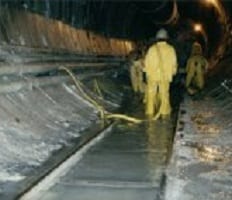
CHEM-CRETE® HYDRO FOAM CCC526H
One Component Hydro Active Polyurethane Foam for Cutting Off Active Water Leaks
-

CHEM-CRETE® RIGID FOAM CCC530
Two Component Hydro Active Water Cut-Off Polyurethane Resin, Expands 16 Times
-
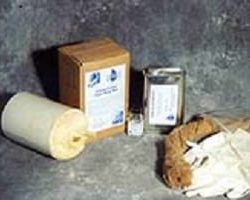
CHEM-CRETE® PIPE PLUG
Fiber-filled Hydro-active Polyurethane Grout for Water Shut-off in Concrete & Pipe Petrusion, Expands 10 – 14 times
-

CHEM-CRETE® DRY OAKUM
Twisted Jute Fiber In Rope Form
-
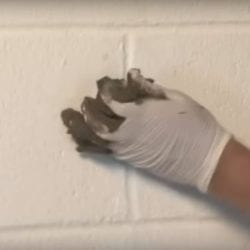
CEM290-H
Hot Set Hydraulic Cement (45 seconds)
-
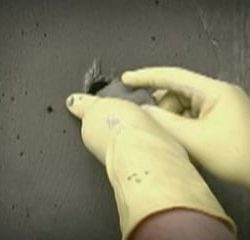
CEM290-R
Hot Set Hydraulic Cement (3 to 5 minutes)
Water doesn’t wait for a convenient repair window. A crack that starts weeping today can be gushing by tomorrow, and by the time anyone notices, the leak has already found the path of least resistance through concrete, masonry, or a pipe penetration. International Chem-Crete’s Water Cutoff & Polyurethane Grouts line exists for exactly that moment: fast-reacting materials built to stop water on contact, whether the job is plugging active pipe penetrations, sealing a hairline crack, or shutting down a high-pressure gusher underground.
Instant Plugs for Active Leaks
When water is actively running, there’s no time for a product that needs ideal conditions to work. CEM290-R and CEM290-H are hydraulic cement plugging compounds built for exactly that scenario. CEM290-R sets in 3 to 5 minutes even underwater, while CEM290-H sets in just 45 seconds, both packed by hand directly into the leak until the flow stops. Both are used above or below grade, in basements, tunnels, sewage systems, dams, and swimming pools, anywhere plugging active pipe leaks and seepage has to happen immediately, not after the area dries out. That speed matters most when plugging active leak points that are already moving water.
For pipe penetrations specifically, CHEM-CRETE DRY OAKUM and CHEM-CRETE PIPE PLUG work as a system. Dry Oakum is a tar-free jute fiber rope that’s packed into the gap around a pipe or duct before a polyurethane resin is applied, giving the resin something to grip and expand against. CHEM-CRETE PIPE PLUG takes that a step further as a self-contained kit: a fiber-filled polyurethane grout that expands 10 to 12 times its original size on contact with water, curing into a tough, corrosion-resistant foam plug in minutes.
Together, they’re a reliable answer for plugging active pipe penetrations in wastewater plants, reservoirs, tunnels, utility pipes, and manholes where a leak can’t be scheduled around. For plugging utility pipe openings specifically, the kit gives crews an instant, ready-to-use option.
Polyurethane Injection Foams for Every Kind of Crack
Not every leak calls for hand-packed cement. For cracks and joints that need to be injected under pressure, Chem-Crete offers three polyurethane foam systems, each built for a different situation.
CHEM-CRETE RIGID FOAM CCC530 is a two-component, hydrophobic system that expands up to 16 times on contact with water, purpose-built for dead cracks and gushing, high-pressure water in wastewater plants, reservoirs, tunnels, and foundations. It’s also effective for soil stabilization and grout curtains, going well beyond simple crack repair.
CHEM-CRETE HYDRO FOAM CCC526H is a one-component, hydrophilic foam designed for moving cracks in continuously moist environments, where a rigid, hydrophobic material would eventually crack again as the structure shifts.
CHEM-CRETE FLEX FOAM CCC524 splits the difference: a two-component, low-viscosity, flexible resin that expands up to 5 times and is built specifically for moving cracks, expansion joints, and hairline cracks that need to flex along with the structure rather than fight it.
Choosing the Right Product for the Leak
Picking between these systems comes down to two questions: is the crack moving, and how much water pressure is behind it?
- Dormant, non-moving crack under heavy water pressure: Rigid Foam CCC530
- Moving crack in a continuously wet or submerged environment: Hydro Foam CCC526H
- Moving crack or expansion joint that isn’t constantly wet: Flex Foam CCC524
- Water actively running right now: CEM290-R, CEM290-H, or the Pipe Plug system, all built to stop water on contact
For highway departments, municipalities, and contractors managing water infrastructure, that distinction is the difference between a repair that holds and one that reopens in the next freeze-thaw cycle. Whether it’s plugging an active pipe leak in a treatment plant, plugging utility pipe penetrations in a tunnel wall, plugging active leak points in a basement wall, or injecting a moving joint in a parking structure, the right product stops water once and keeps it stopped.
Frequently Asked Questions
Que : What’s the difference between hydrophobic and hydrophilic polyurethane foam?
Ans : Hydrophobic foams like Rigid Foam and Flex Foam repel water once cured, making them well suited to structures that dry out between exposures. Hydrophilic foam like Hydro Foam remains flexible and effective even in continuously wet or submerged conditions, since it’s designed to work with persistent moisture rather than against it.
Que : How fast do these products actually stop a leak?
Ans : It depends on the product. CEM290-H sets in as little as 45 seconds by hand, while the polyurethane injection foams begin reacting within 35 to 40 seconds of contact with water and reach a tack-free state within 3 to 5 minutes.
Que : Can Chem-Crete Dry Oakum be used on its own, without a polyurethane resin?
Ans : No. Dry Oakum is designed to be used alongside Flex Foam, Hydro Foam, or the Pipe Plug system. It provides the fiber structure the resin saturates and expands into, rather than functioning as a standalone sealant.
Que : Is Rigid Foam CCC530 suitable for continuously wet environments?
Ans : Not ideally. Rigid Foam is hydrophobic and works best for dead, non-moving cracks under gushing or high-pressure water. For a crack in a continuously moist or submerged setting, Hydro Foam’s hydrophilic chemistry is the better fit.
Que : Do these products work on cracks underwater, or only above the waterline?
Ans : Several do. CEM290-R and CEM290-H both set underwater by hand, and Rigid Foam, Flex Foam, and Hydro Foam are all listed as suitable for underwater applications when injected under the right conditions.