
Showing all 3 results
-
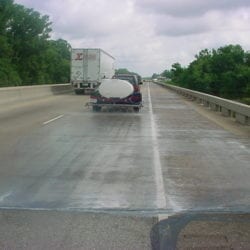
CHEM-CRETE® PAVIX® CCC® 100
Concrete Protection Against Water, Moisture & Ice and Durability Solution by Pore Blocking and Lining Using Topical Treatment for Green & Cured Concrete for Airports, Highways & Bridges
-
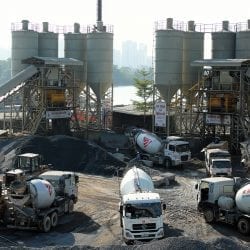
CHEM-CRETE® MCE™
Multi-crystalline Admixture for Improving Concrete Durability and Performance
-
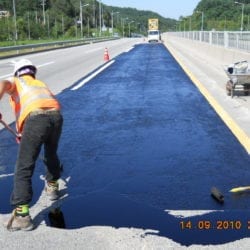
CHEM-CRETE ASP®
Silicone Modified Asphalt Pavements Sealer
Concrete does not break down overnight. It fails one freeze-thaw cycle, one chloride ion penetration, one hairline crack at a time, until a structure built to be last decades starts showing its age in years. In pavement construction, both concrete pavements and asphalt pavements share similar durability issues and concerns. That’s the problem International Chem-Crete set out to solve nearly 50 years ago, and it still continues to be the problem our Concrete Structures Protection line is designed to conquer.
Every road, runway, bridge deck, and parking structure is under constant attack from forces most people never think about, such as deicing salts eating away reinforcing steel, water and vapor working through pores and micro-cracks, and alkali-silica reaction slowly expanding concrete from within. These threats can’t be ignored for any structural construction company that is responsible for sustainable structures to be used for 30, 40, or 50 years. It’s a budget problem waiting to happen. A proactive pavement preservation strategy pays for itself many times over.
Why Pavement Preservation Beats Repair
There’s an old saying in infrastructure management: the best time to protect a pavement is before it needs repair, not after. When cracking, scaling, spalling, or corrosion of the rebar occurs, you are no longer “maintaining”; you are “rebuilding,” and rebuilding costs many times what preservation does.
Our pavement preservation treatment and products are specifically designed to get ahead of that curve, penetrating and lining the pore structure of concrete so water, chlorides, and moisture can’t do the damage they’re designed to do.
Three products, three ways to protect:
- CHEM-CRETE® MCE™: A multi-crystalline permeability reducing admixture (PRA), mixed directly into the fresh concrete batch, that waterproofs the whole concrete matrix from within. Ideal for any structural construction company that wants durability-engineered, sustainable infrastructure from the start rather than added on later. MCE is simply dosed to the concrete mixture as any other admixture.
- CHEM-CRETE® PAVIX® CCC® 100: A topical treatment that can be used on green and cured concrete alike, blocking pores and lining capillaries against water, moisture, and ice adhesion. Built as a concrete sealer for airport runways, highway pavements, and bridge decks, where reliability under constant traffic and weather stress is non-negotiable.
- CHEM-CRETE Greenicer: A green deicer and crystalline waterproofing and restoration treatment for concrete pavements. It is used for pavement treatment and bridge deck protection against ice adhesion.
- CHEM-CRETE ASP®: A silicone-modified asphalt sealer custom-made for asphalt pavements, enhancing pavement durability and extending service life on the asphalt side of a project with the same protect-first approach.
Structural Protection Services Built on Real Chemistry
It’s not just the products that tie this category together, but the way it’s done. International Chem-Crete does not provide one-size-fits-all pavements. We provide structural protection products based on years of laboratory and field-tested chemistry, aimed at the specific mechanisms that actually cause concrete and asphalt failures: chloride ion penetration, freeze-thaw cycling, ASR, biological attack, ice adhesion, and moisture flow through both positive and negative sides of a structure.
That distinction matters for :
- Highway departments managing thousands of lane-miles
- Municipalities responsible for aging infrastructure
- Airport authorities where downtime isn’t an option
- Engineers writing specifications that are required to last for years, decades, or even generations.
Whether it is protecting a freshly poured structure or extending the life of an existing structure, this category is designed to be the foundation for pavement preservation programs that actually deliver, resulting in fewer emergency repairs, longer asset life, and lower total cost of ownership.
Protecting pavements and structures isn’t about putting on a sealer and hoping for the best. It’s about understanding the actual deterioration of concrete and asphalt and then engineering a solution that interrupts that deterioration at the point of its origin. That’s what nearly five decades of International Chem-Crete research has been built around, and why any structural construction company looking for a long-term pavement preservation partner keeps coming back to this category.
FAQs
Que : What is the difference between concrete crystalline waterproofing and water-repelling
Ans : Crystalline waterproofing is pore-blocking or filling for reducing water permeability through the precipitation of crystals (hygroscopic and/or hydrophilic crystals) within the concrete pores. Water-repelling is just establishing hydrophobicity at the pore surfaces that reduces water absorption under insignificant hydrostatic pressure.
Que : What’s the difference between a topical treatment and an admixture for pavement protection?
Ans : A topical treatment like PAVIX CCC-100 is applied to the surface of green or cured concrete, penetrating and then blocking existing pores and capillaries after placement. The resulting concrete automatically contains a protective density from the very beginning, as an admixture is added to the concrete when it is being mixed, leading to pore blocking for the wall concrete structure.
Que : Can these products be used on existing pavements, or only new construction?
Ans : MCE is used only in new construction. PAVIX CCC-100 is formulated to work on cured, in-service concrete as well as new pours, making it a practical option for preservation programs on existing highways, bridges, and airport pavements. ASP is applicable to new and existing asphalt pavement.
Que : Is asphalt protection different from concrete protection?
Ans : Yes. Asphalt and concrete have different chemistry and deteriorate through different mechanisms, which is why CHEM-CRETE ASP® uses a silicone-modified formulation specifically suited to asphalt, separate from the crystalline waterproofing chemistry used on concrete. From a functionality perspective, both pavement durability solutions target pore blocking and water repellency.